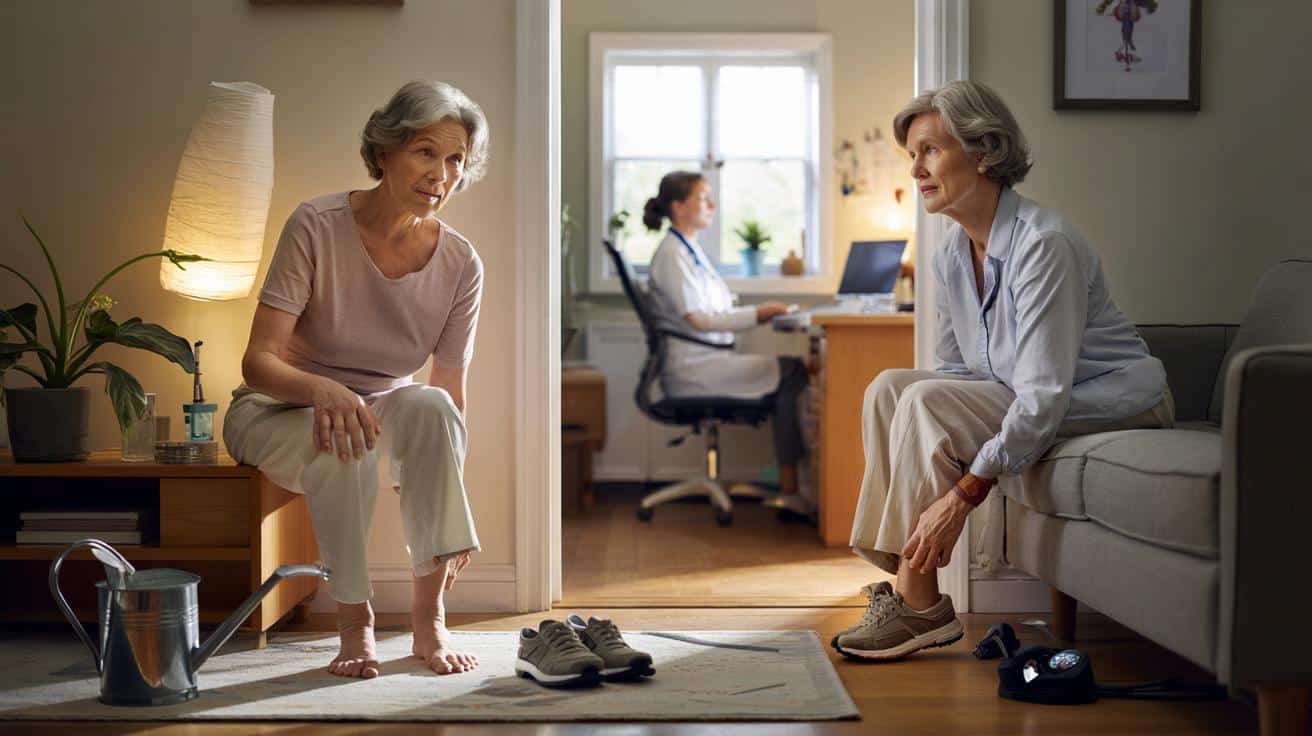
At 65, I caught myself doing that slow old-person shuffle across the living room and laughed. My knees ached, my lower back pinched if I bent too fast, and climbing the stairs suddenly felt like a small mountain stage of the Tour de France. My first thought was the one so many of us have: “Well, this is it. This is just getting old.”
I stopped gardening because getting down to the soil was torture. I avoided evening walks with friends because I didn’t want to be the one lagging behind. Quietly, I began to shrink my life around my symptoms, as if they were part of some inevitable script.
Then my doctor looked at me over her glasses and said, very calmly: “This isn’t ‘old age’. It’s a routine issue, and we can work on it.”
That one sentence changed everything.
“I thought I was just getting old” – and what my doctor really saw
The day of my check-up, I almost canceled. My knees were stiff, my sleep was patchy, and the scales had crept up again. It felt embarrassing to go in and “complain” about things that, in my head, were simply called aging.
In the waiting room, everyone seemed younger, busier, glued to their phones. I sat there with my paper magazine and my quiet fears. When my name was called, I nearly apologized before I’d even sat down. I listed my aches, my fatigue, the way I’d started needing the handrail for the stairs. I expected a gentle pat on the hand. Instead, my doctor took out a pen and started writing a list.
She labeled it: routine causes.
She asked me about my day. Not my “health history” in abstract terms, but literally from the moment I woke up to the moment I went to bed. Within five minutes, she had spotted three classic culprits: not moving enough, not drinking enough water, sleeping badly. That was before we even talked about my knees.
Then came the concrete checks. Blood pressure: a bit high. Blood tests: vitamin D low, slight inflammation, borderline blood sugar. Weight: up about 10 kilos in the last decade. She explained that each of these things could quietly sabotage joints, energy levels, and mood. None of them were dramatic on their own. Together, they were writing a story I had wrongly filed under “old age”.
She wasn’t dismissing my years. She was refusing to blame them for everything.
➡️ If you feel uneasy when plans change suddenly, psychology explains the need for internal order
➡️ I tried this creamy tuna pasta bake and it brought back childhood memories
➡️ “I didn’t know why evenings disappeared,” this routine fixed it
➡️ A small change in how you organize bags can save time every morning
➡️ “After 60, my sleep improved when I dimmed lights”: the melatonin sensitivity shift
➡️ How small daily resets prevent weekend cleaning marathons
➡️ This job allows workers to earn comfortably without relocating
➡️ Why this haircut suits busy lifestyles more than trendy styles
Her explanation was disarmingly simple. Around 60–70, a lot of small, fixable issues arrive at once: muscle loss from sitting too much, dehydration, minor deficiencies, uncorrected vision, side effects from long-term medication. They build a kind of fog around how we feel. We call that fog “getting old”, she said, but medically, much of it is routine.
She told me about patients whose “senior moments” were actually untreated sleep apnea, whose “weak legs” were deconditioning from years of avoiding stairs, whose “tiredness” was plain anemia. *Our bodies do age, yes, but they also respond incredibly well to small, targeted changes.*
That was the first time I realized I might not be doomed to the slow shuffle I’d already accepted.
What changed when I started treating “aging” like a solvable routine
The first thing my doctor did was astonishingly ordinary. She gave me a prescription not just for tests, but for a daily 15-minute walk. Not 10,000 steps, not a gym program, just 15 minutes at a pace that made talking slightly harder. I almost laughed. Fifteen minutes? After all this drama?
She explained that at my age, the body loses muscle faster, especially in the legs and hips. A short, consistent walk wakes up those muscles, helps joints lubricate, and even steadies balance. Starting tiny meant I’d actually do it. And she was right. I began walking around the block after lunch, feeling a bit foolish at first, like I was following homework from school.
Within ten days, the stairs hurt a little less.
At our next appointment, I admitted a habit I wasn’t proud of. I drank maybe two glasses of water a day, but plenty of coffee. My doctor didn’t scold me. She just described, almost like a weather report, what mild, chronic dehydration does in older bodies: thicker blood, lower energy, headaches, false hunger, and more pressure on already cranky joints.
We’ve all been there, that moment when you realize your “mysterious” problem is something as boring as not drinking enough water. She asked me to try one small experiment: one glass of water upon waking, one with lunch, one mid-afternoon. That was it. No fancy bottle, no app. Let’s be honest: nobody really does this every single day. But I did it most days, and the constant heavy fatigue I had blamed on age… softened.
I didn’t feel 25. I just didn’t feel 95 anymore.
She also reviewed my medication one by one. A cholesterol pill I’d taken for years turned out to be worsening my muscle aches. A blood pressure tablet was contributing to my nighttime bathroom trips and shattered sleep. She adjusted doses, moved one pill to the morning, another to the evening, and sent me for a simple sleep study.
Her message was clear: **routine checks after 60 aren’t a luxury, they’re maintenance**. Cars get serviced more regularly as they age; bodies deserve the same. Once my vitamin D was corrected, my mood lifted. When my sleep apnea was treated, my “age-related” brain fog receded. My blood pressure came down with milder meds and those daily walks. Piece by piece, the narrative shifted from “this is just what 65 feels like” to “this is what 65 feels like when a few basics are neglected.”
The difference sounds subtle. It didn’t feel subtle at all.
Learning to listen to symptoms without blaming your age
The method my doctor taught me is surprisingly simple. When a new symptom appears — pain, fatigue, dizziness, memory lapses — I write it down with three details: when it started, what I was doing, and what had recently changed in my life. That way, I’m not arriving at the appointment with a vague “I feel old”. I’m bringing patterns.
Then I ask one question out loud: “If I were 40 with these same symptoms, what would we be checking?” It’s a small trick that stops both me and my doctor from blaming my birth year for everything. Very often, the workup is completely standard: blood tests, medication review, maybe a scan or a referral to physio.
The age stays on the file. It doesn’t dominate the conversation.
There’s another habit I had to unlearn: minimizing discomfort because “others have it worse”. I’d see friends with canes or wheelchairs and decide my own pain wasn’t worth mentioning. That meant I waited too long, which made everything harder to treat. Routine issues like osteoarthritis, early diabetes, mild depression — they all behave better when caught early.
If you recognize yourself in this, you’re not alone. Many of us were raised to be stoic, to “get on with it”. My doctor gently called this out. She said hiding symptoms to be “brave” only gives small problems more time to dig in. **Being honest about pain, sadness, or exhaustion is not complaining, it’s data**. That line stayed with me.
These days, I’d rather sound a bit repetitive than silently surrender parts of my life.
At one visit, I asked my doctor what she wished more people over 60 would do. She paused, then smiled and said:
“Stop assuming everything is age. Age is real, but so are vitamin deficiencies, poor sleep, untreated anxiety, and side effects from old prescriptions. Those are the things we can work on together.”
She scribbled a short list for me, and I’ve kept a version of it on my fridge ever since:
- Walk at least 10–15 minutes most days, at a pace that slightly challenges you.
- Drink water regularly, not just coffee or tea.
- Ask once a year for a medication review, including over-the-counter pills.
- Report new pain, unusual fatigue, or mood changes — even if they seem “normal for your age”.
- Check vision, hearing, and sleep; these three quietly shape your daily energy.
That list looks so simple on paper. Lived consistently, it’s the difference between enduring your 60s and actually inhabiting them.
Redefining what “aging” means when so much is still adjustable
These days, I still creak in the morning. I still lose words sometimes and forget why I walked into a room. I haven’t found a magic pill that rolls back the years. What changed is my relationship with what I feel. I no longer assume every new ache is destiny. I see it as a question to be explored, often starting with the most routine, unglamorous answers.
The emotional shift is subtle but powerful. When you believe your symptoms are untouchable, you slowly step back from the world. When you treat them as partly negotiable, you stay curious, you stay in motion, you keep making appointments, asking questions, tweaking small things. That attitude doesn’t erase aging. It makes room inside it.
If you’ve been shrinking your life around the label “I’m just getting old”, maybe this is the quiet invitation you needed to test that story. Talk to your doctor. Bring your list. Ask the 40-year-old question. See what happens when “just aging” becomes a conversation, not a full stop.
| Key point | Detail | Value for the reader |
|---|---|---|
| Many “aging” symptoms are routine issues | Pain, fatigue, and brain fog often link to hydration, sleep, deficiencies, or meds | Opens the door to concrete, realistic improvements |
| Small, consistent habits matter | Short daily walks, regular water intake, and annual medication reviews | Gives simple actions that genuinely change how you feel day to day |
| Talking openly with your doctor is crucial | Arriving with notes, asking what would be checked at 40, reporting new symptoms | Helps you get thorough care instead of having everything blamed on age |
FAQ:
- Question 1How do I know if my symptoms are “normal aging” or something routine that can be treated?
You can’t always know alone, which is why a check-up helps. Bring a list of your symptoms, when they started, and what has changed recently. Ask your doctor what they would test if you were younger with the same issues. Often, you’ll uncover treatable factors alongside natural aging.- Question 2Isn’t it too late to change things once you’re over 65?
No. Muscles respond to training at 70 and 80, sleep can improve, deficiencies can be corrected, and medications can be adjusted. You may not reverse everything, but you can often gain comfort, mobility, and confidence at any age.- Question 3What should I mention to my doctor that I usually ignore?
Mention any new or worsening pain, breathlessness, sudden changes in weight, constant fatigue, low mood, memory changes, repeated falls, or sleep problems. Also mention over-the-counter pills and supplements, as they can interact with prescriptions.- Question 4Do I need expensive tests to sort routine issues out?
Often, no. Many first steps are simple: blood pressure checks, basic blood tests, a medication review, and questions about sleep, diet, and movement. More specialized tests come later if needed, based on what those first results show.- Question 5What if my doctor dismisses everything as “just age”?
You have the right to a second opinion. You can say calmly, “I understand age plays a role, but I’d like to explore other possible causes too. What else could be contributing?” If you still feel unheard, looking for another doctor who listens and explains can change your experience dramatically.