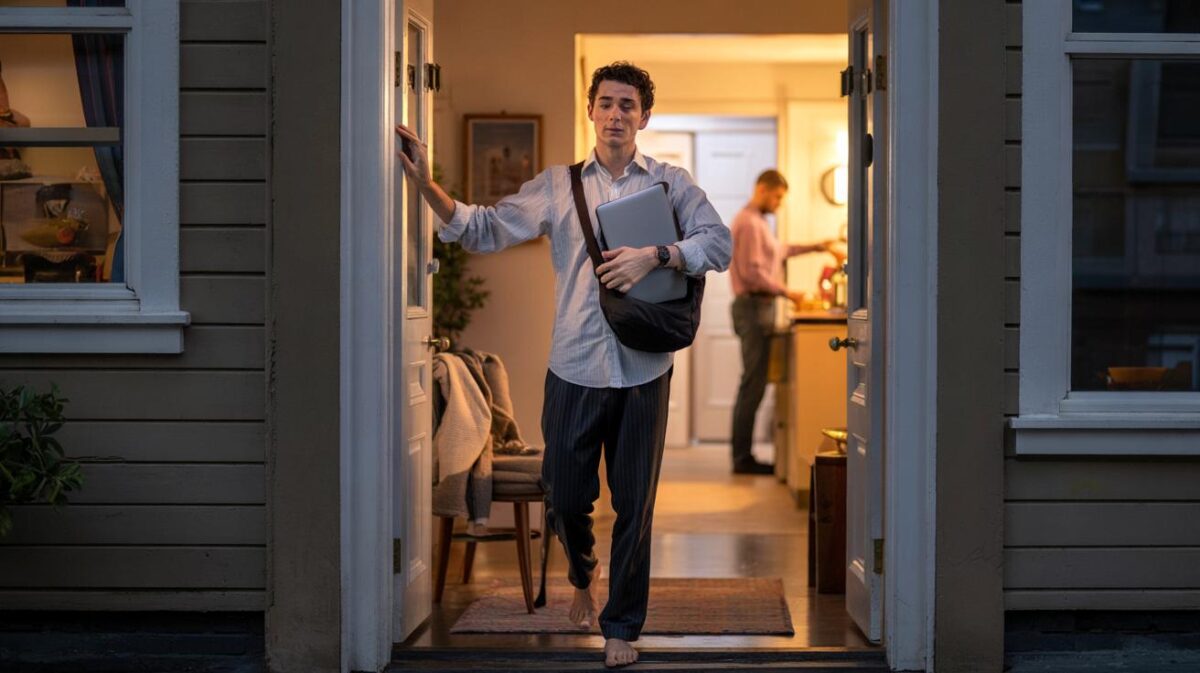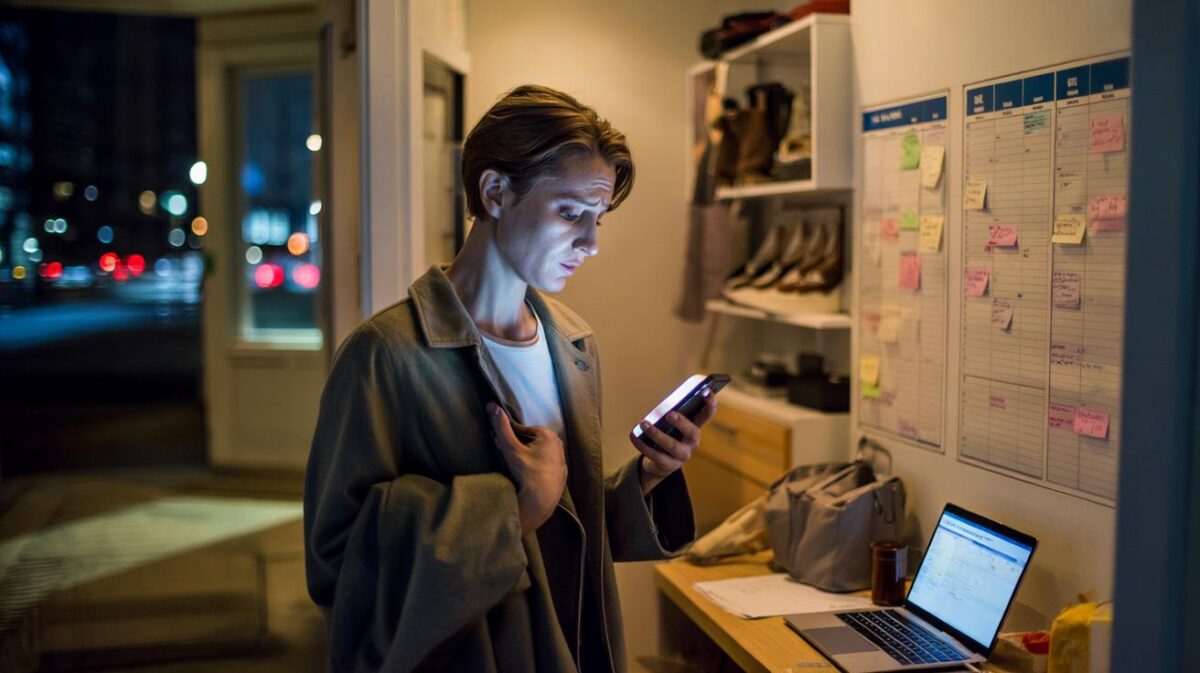
The message arrives. You look at it. You don’t answer.
Not because you don’t care, but because some strange inner cursor is blinking: “Wait.”
You go on with your day half-present, half-elsewhere. Your body is in the room, your smile appears on cue at the right jokes, but a part of you stays in a kind of emotional hallway, not entering any door. You tell yourself you’re tired, or “not in the mood for drama”. You scroll, you tidy, you eat something standing, straight from the fridge.
Deep down, you’re not numb. You’re on standby.
And that emotional pause didn’t appear by magic.
Why we learn to live emotionally “on standby”
If you’ve ever felt like your feelings are buffering, like a video that never fully loads, you’re not alone.
This strange half-frozen state is rarely a personality trait. It’s usually a survival trick you picked up along the way.
When emotions meant trouble, conflict, or rejection, your nervous system built a clever shortcut: “Don’t react right now. Delay. Go neutral.”
What looks like indifference from the outside is often an old, loyal defense mechanism doing its job a little too well.
We call it being detached. Often, it’s just being trained to pause yourself.
Picture Lena, 32. At work, she’s praised for being “calm under pressure”. Her partner says she’s “low drama”.
Yet when something hurts her, her first internal reaction is always the same: silence, then a vague “I’ll think about it later.”
She doesn’t cry, doesn’t explode, doesn’t even argue. She whispers “It’s fine” and changes the subject.
Two days later, she can’t sleep, her jaw is clenched, and small harmless comments suddenly sting like wasps.
Growing up, every time she showed emotion, she heard, “Stop exaggerating” or “Don’t start.”
Her brain learned the rule: emotion equals danger, so better hit pause.
➡️ “I thought cutting expenses would fix everything, it didn’t”
➡️ This common cleaning habit actually creates more work later
➡️ This job allows workers to earn comfortably without relocating
➡️ If you feel uneasy when plans change suddenly, psychology explains the need for internal order
➡️ “I couldn’t relax after work,” this simple transition habit finally helped
➡️ This haircut helps disguise cowlicks better than any styling trick
➡️ If you’re over 65, this subtle shift in appetite is more physiological than emotional
➡️ “At 65, I thought I was just aging”: why my doctor said it was actually a routine issue
Psychologists talk about “emotional inhibition”, “fawning”, or “freeze response”, but in daily life it just feels like this: your heart knows something, and your mouth says, “Everything’s okay.”
The gap between the two is where standby lives.
This response is learned through repetition.
If childhood or past relationships punished your feelings, your nervous system adapted by stretching the time between emotion and expression.
That delay once kept you safe. Today, it can quietly sabotage intimacy, decisions, and even your sense of self.
Because when you’re always waiting for the “right moment” to feel, you slowly forget what you truly want.
How to gently unlearn emotional standby
One concrete way to start: shorten the distance between what you feel and what you notice.
Not what you say to others yet. Just what you admit to yourself.
Set a tiny internal alarm: whenever you catch yourself replying “I don’t know how I feel”, pause for 30 seconds.
Put your hand on your chest or stomach, close your eyes if you can, and ask, very simply: “Is this pleasant, unpleasant, or neutral?”
That’s all. Not a full emotional report, just a basic orientation.
Little by little, this trains your brain to register emotions in real time instead of parking them in the waiting room.
A common trap is trying to “fix” standby mode by forcing yourself into big emotional scenes.
You decide, overnight, that you’ll “finally say everything” or “always speak your truth”.
The pressure is huge, so you shut down again. Then you blame yourself for being “cold” or “broken”.
You’re not broken. You’re practiced.
Gentler is stronger. Start with low-stakes situations: admitting, “That comment stung a bit” to a trusted friend, or texting, “I need a moment, I’m a bit overwhelmed” instead of pretending you’re fine.
Let’s be honest: nobody really does this every single day.
But every small honest sentence stretches your emotional muscles.
The more you practice, the more a new script can install itself in your mind. One that says: feeling now is safer than storing it for later.
“Emotional standby is not a flaw in your character, it’s a strategy your body invented when you didn’t have better options.”
- Name the delay
Quietly say to yourself, “I notice I’m going into standby.” That alone brings you back into awareness. - Use “micro-truths”
Instead of long speeches, try short phrases: “I’m a bit hurt”, “I’m confused”, “I need time.” These are easier for a trained-quiet system to handle. - Create a safe exit ramp
Agree with someone you trust that you can send a simple word like “pause” or “overwhelmed” when you feel yourself shutting down. That word becomes a bridge instead of a wall.
Living with emotions switched on (without drowning)
There’s a strange fear that if we stop living on standby, we’ll turn into a chaos version of ourselves, crying at meetings or shouting in the kitchen.
Reality is usually softer than that.
When standby mode starts to loosen, people often describe feeling more color in their days. Music hits deeper. Food tastes better. Hugs land differently.
They also notice sooner when something is off, instead of crashing three weeks later.
Unlearning emotional pause isn’t about becoming dramatic. It’s about becoming available.
To hurt a bit more sometimes, yes. But also to connect more accurately, to choose faster, to say “no” before resentment builds quietly in the background.
| Key point | Detail | Value for the reader |
|---|---|---|
| Standby is learned | Emotional delay often comes from past environments where feelings were unsafe | Shifts self-image from “broken” to “adapted”, which reduces shame |
| Change starts small | 30-second check-ins and short honest phrases gradually retrain the system | Makes emotional work realistic and doable in daily life |
| Safety can be updated | New, kinder relationships and self-talk teach the brain that expression is not a threat | Opens the door to deeper intimacy and clearer boundaries |
FAQ:
- Question 1How do I know if I’m in emotional standby or just genuinely calm?Notice what happens later. If you regularly replay conversations in your head at night, cry “out of nowhere”, or feel tension in your body without clear reason, you’re likely delaying emotions rather than lacking them.
- Question 2Can emotional standby be linked to trauma?Yes. Many people develop this response after chronic criticism, emotional neglect, or turbulent relationships. It’s a form of protection the nervous system uses to avoid more hurt.
- Question 3Is it possible to change this pattern as an adult?Absolutely. With practice, therapy, and safer relationships, the brain can learn new responses. The goal isn’t zero standby, but more choice about when you pause and when you express.
- Question 4What if my partner thinks I don’t care because I shut down?You can share this concept with them and explain that your delay is not lack of love but an old habit. Agree on signals and gentle questions that help you stay present without pressure.
- Question 5Should I dig into my past to fix this, or focus on the present?Both can help. Understanding where the pattern comes from brings compassion, while present-day micro-changes build new wiring. Many people find a mix of reflection, therapy, and small daily experiments most effective.