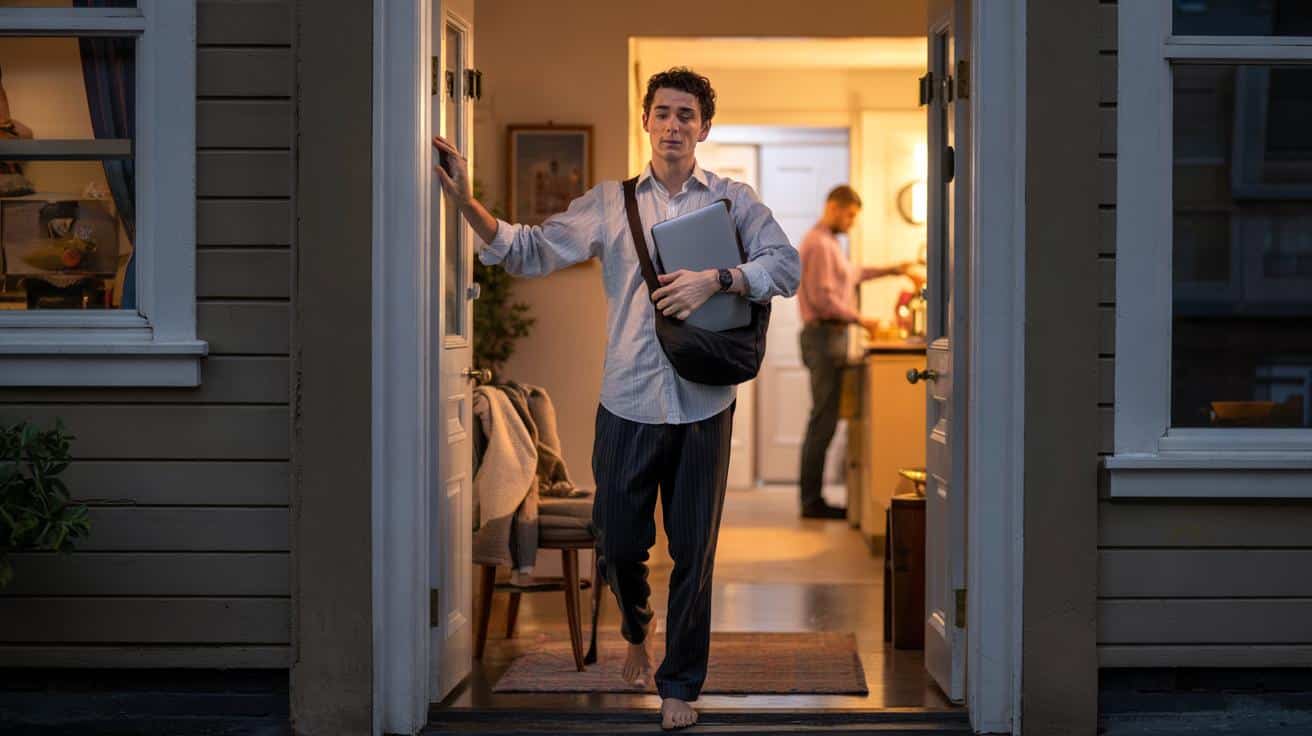
The train doors closed on my laptop, still open in my head. My body left the office, but my mind stayed glued to the last email, the unfinished slide, the Slack notification I’d “just check later”. I’d get home, drop my bag, and scroll my phone in the hallway like I was still on the clock. My partner would ask about my day. I’d answer, but my brain was somewhere between a spreadsheet and tomorrow’s 9 a.m. meeting.
Dinner tasted like cardboard. Netflix episodes blurred. Even the shower felt like a conference room where my thoughts presented worst-case scenarios. Sleep came late and left early.
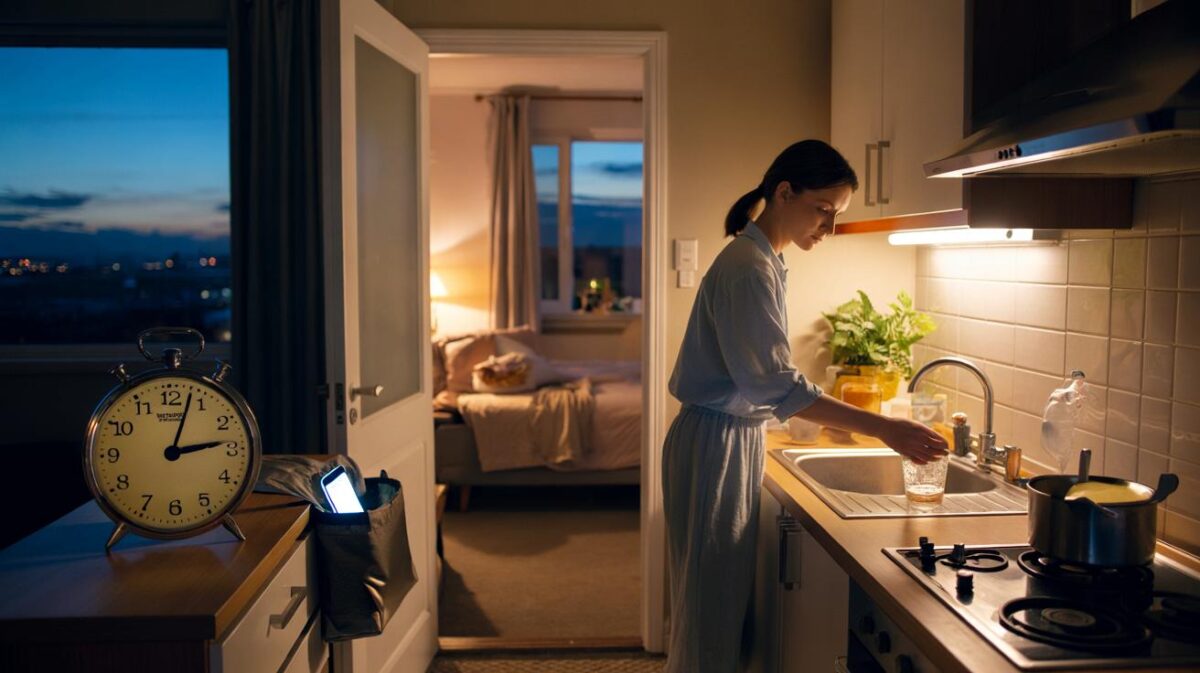
One night, staring at the ceiling at 1:13 a.m., I realised something almost embarrassing. I’d never actually taught my brain how to stop working.
That changed with one strangely simple habit.
The invisible problem on the commute home
There’s this weird pause between leaving work and arriving home where we’re physically moving but mentally stuck. You close your computer, walk out of the building, maybe grab the bus or drive through traffic. On paper, the workday is over. Yet your thoughts keep replying to emails that no one will send until tomorrow.
You replay conversations. You rewrite that one sentence your manager said. You predict how that project will go wrong. By the time you reach your front door, your stress has unpacked itself before you do.
The day hasn’t ended. It’s just changed location.
A friend of mine, Lea, realised this on a rainy Tuesday. She was stuck in her car outside her apartment, engine off, wipers still ticking. She’d spent the entire 30‑minute drive role-playing a tense call scheduled for the next morning. She parked, glanced at the time, and saw she’d been sitting there for 12 extra minutes, hands frozen on the steering wheel.
Inside, her two kids were already in pyjamas. Her partner was cooking. She was technically home, yet miles away. That night, after snapping at a simple question about pasta sauce, she ended up crying in the bathroom, frustrated that she couldn’t “switch off”.
She wasn’t lazy. She wasn’t ungrateful. She just had no off-ramp from work mode.
➡️ If you feel weighed down by minor choices, psychology explains the hidden emotional load
➡️ “I felt financial pressure even when nothing was ‘wrong’”
➡️ “At 65, I thought I was just aging”: why my doctor said it was actually a routine issue
➡️ Why this haircut suits busy lifestyles more than trendy styles
➡️ “I thought cutting expenses would fix everything, it didn’t”
➡️ If you feel uneasy when plans change suddenly, psychology explains the need for internal order
➡️ People who feel pressure to adapt constantly often suppress emotional feedback
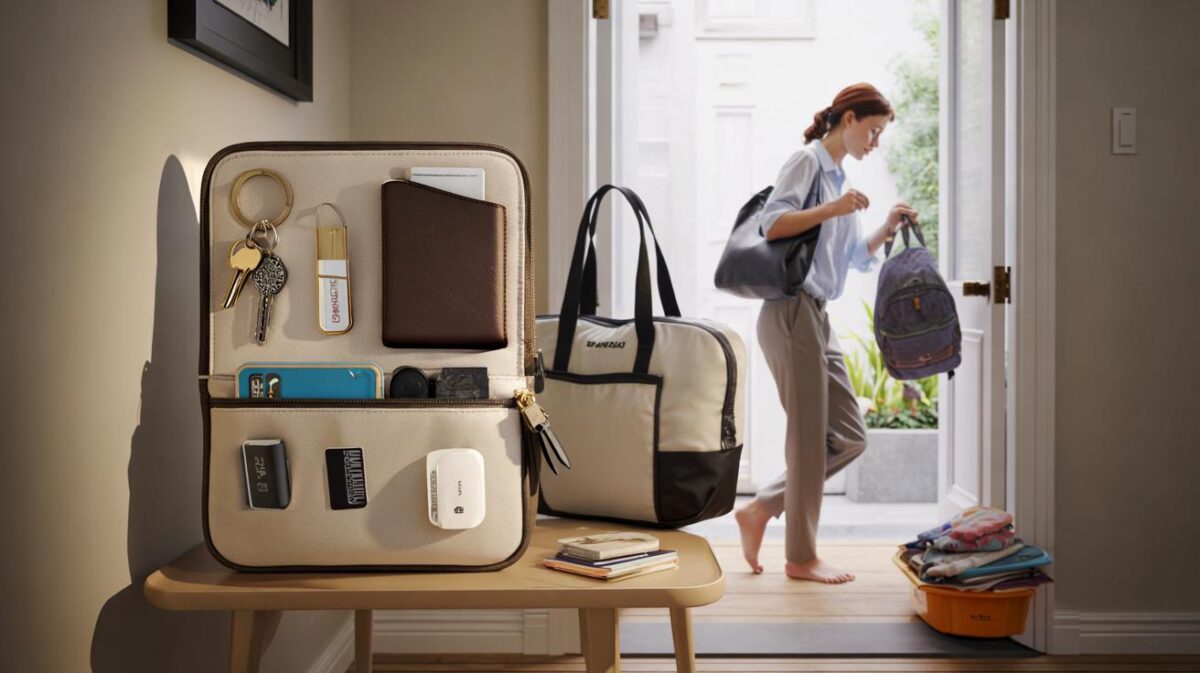
➡️ A small change in how you organize bags can save time every morning
Our brains love routines. The coffee ritual that signals “start focus”. The office door that whispers “here we go”. The calendar alerts that push us from task to task. But most of us never installed a proper signal for “your shift is over”. So the mind just keeps spinning, waiting for a cue that never comes.
Without that cue, we carry “unfinished business energy” into everything: dinner, scrolling, doom-thinking in bed. Physiologically, your nervous system stays in go-mode. Heart a little faster. Muscles a little tighter. Thoughts on a low boil.
*No wonder you can’t relax if your brain still thinks it’s at your desk.*
The 10‑minute transition ritual that changes the whole evening
The habit that finally helped me sounds small: a deliberate, 10‑minute transition ritual between “work me” and “home me”. Not a bubble bath. Not a spa day. Just a short, repeatable sequence that tells my brain, very plainly, “We’re done for today.”
Mine happens right after I close my laptop. I write a two-line note for tomorrow, physically pack my work tools away, then step outside for a five‑minute walk around the block. Same route, same jacket, same podcast intro. At the last corner before home, I stop, take one deep breath, and ask myself out loud: “What can wait until tomorrow?”
That question is the door closing. When I step back inside, I act as if my workplace no longer exists.
A lot of people imagine they need an hour-long routine or a whole “evening reset” to feel any difference. Let’s be honest: nobody really does this every single day. Some evenings are chaos. Some commutes get hijacked by late calls. The trick is having a tiny, non-negotiable transition you can protect most days.
Lea created her own version in the car. Before leaving the office parking lot, she voice-notes herself a rough list of tomorrow’s priorities, then ends with one sentence: “Today is officially closed.” Once she gets home, her phone goes straight in a drawer for the first 20 minutes. She plays one song with her kids and changes clothes immediately.
The ingredients don’t need to be poetic. They just need to be consistent enough that your brain starts to recognise the pattern.
What trips many of us up is turning the transition into yet another performance. We design a 12‑step ritual, buy three new journals, download four apps, then abandon everything on day three because we’re tired. Or we berate ourselves for thinking about work at all, which only keeps us more attached to it.
A kinder approach works better. Expect your mind to wander back to work. Notice it. Gently guide it back to the here and now. No drama. No “I’m failing at relaxing” speech. **Relaxation is not a switch, it’s a slope.**
The less you judge yourself for needing a transition, the smoother that slope becomes.
Sometimes the real luxury isn’t a weekend in a cabin. It’s granting yourself those 10 unspectacular minutes between “I’ve done enough” and “I’m home now.”
- Give your ritual a clear start cue
A specific trigger like closing your laptop, turning off your office light, or locking your car anchors the habit. - Keep it under 10–15 minutes
Short enough that you’ll actually use it on busy days, long enough for your nervous system to notice something changed. - Use at least one physical action
Changing clothes, washing your face, or walking a specific route helps your body register the shift. - End with the same simple phrase
Something like “Work is closed” or “I’m off duty now” sounds cheesy, yet trains your brain like a gentle bell. - Protect it like a meeting
Treat this time as seriously as you treat a call with your boss. That’s how it stops being optional self-care and becomes infrastructure.
Letting the day land so your life can expand
When you add a clear transition, evenings feel less like a second shift and more like an actual chapter of your life. You start noticing tiny things that were there all along: the way light hits your kitchen at 7 p.m., the sound of your neighbour’s music, the taste of food when you’re not half-scrolling an email thread. Your body softens a little earlier. Sleep comes a little easier.
The problems at work don’t vanish. The deadlines stay. The tricky colleagues don’t move to another planet. Yet something important shifts: they stop sitting on the couch with you. You’re no longer replaying arguments while someone you love sits two metres away on silent mode.
You don’t need a new job to feel a different life after 6 p.m. You just need a small, stubborn pause that says, “This part of the day belongs to me again.”
| Key point | Detail | Value for the reader |
|---|---|---|
| Install a clear end-of-work signal | Use a consistent cue like closing your laptop, a short note for tomorrow, or turning off office lights | Helps your brain recognise that the workday has actually finished |
| Create a 10‑minute transition ritual | Combine one mental action (note, phrase) and one physical action (walk, change clothes, face wash) | Gently shifts your nervous system from work mode into rest mode |
| Protect the ritual with kindness | Keep it small, repeatable, and judgment-free when the mind drifts back to work | Makes the habit sustainable on real, messy weekdays, not just ideal ones |
FAQ:
- How long should a transition ritual be to actually work?Most people find 5–15 minutes enough. The key is consistency, not length. A short practice done four times a week beats a 45‑minute routine you abandon after two days.
- What if I work from home and don’t have a commute?Create an artificial commute. A short walk around the block, a change of clothes, or moving to a different room can mark the end of your shift just as powerfully as leaving an office building.
- Isn’t it normal to think about work after hours?Yes. The goal isn’t zero thoughts about work. It’s reducing the constant, intrusive rumination that steals your rest and affects your relationships and sleep.
- What if my boss expects me to be always available?Even with a demanding boss, you can usually carve out small protected windows. Start with micro-boundaries: 10 minutes after logging off, no notifications during dinner, or one no‑call evening per week if possible.
- How do I stick to the habit when I’m exhausted?Design the ritual for your worst days, not your best. It should feel almost too easy: one sentence, one physical gesture. If it feels like a project, shrink it until it feels like brushing your teeth.