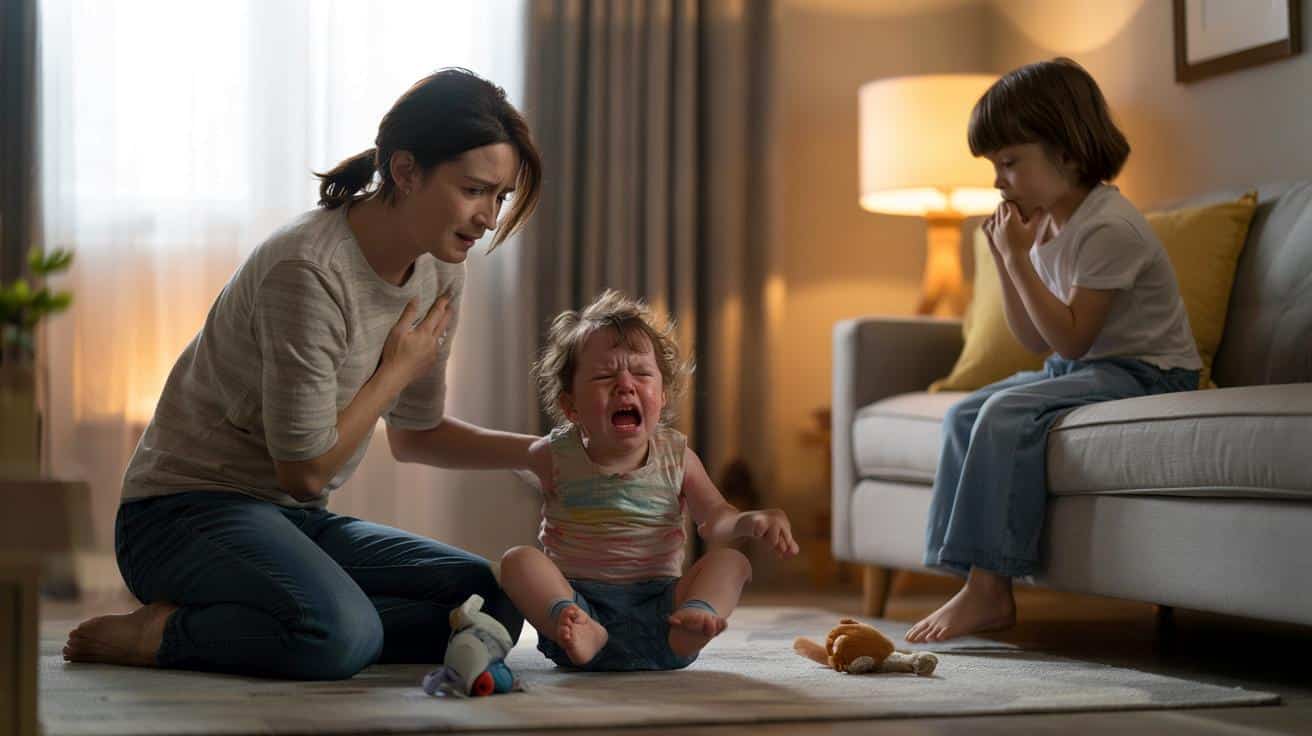
The toddler is screaming on the supermarket floor, starfished between the cereal and the cookies. The parent’s face is bright red, caught between anger, shame, and a wild urge to cry right there next to the shopping cart. A retiree nearby shakes his head. “Kids these days,” he mutters. “No self-control.”
We talk about “natural temperament” like emotions come pre-packaged, as if some people are born calm and others are doomed to explode. Yet watch closely and you see something else: tiny, awkward rehearsals of control. A child copying a deep breath they saw on a cartoon. A teenager walking away instead of slamming a door.
Emotional regulation doesn’t arrive fully formed.
It’s more like learning to drive a car in slow traffic.
Emotional control isn’t a gift, it’s a long, messy construction
Psychologists have been dismantling the myth of “natural self-control” for years. Babies are born with powerful emotions and almost zero tools to handle them. Their nervous system is noisy, reactive, easily overwhelmed. From day one, they borrow the adult’s calm, body language, and rhythm like scaffolding.
What looks like “a calm baby” is often a baby surrounded by people who respond predictably. They get picked up, rocked, talked to in a soft voice. Over thousands of tiny moments, their brain starts to wire in patterns: “When I feel this surge, something soothing happens.” This is emotional regulation in its rawest form, invisible but already under construction.
One classic study filmed mothers and babies in a “still-face” experiment. The mother suddenly stops responding, keeping a neutral, frozen expression. Within seconds, the baby becomes distressed, wriggles, cries, tries everything to pull the mother back into connection. When the mother finally smiles again, the baby gradually calms, like someone turning down a volume knob.
That scene looks simple, even cruel on video. Yet it tells a brutal truth about how regulation grows. The child isn’t calming down by instinct. They are co-regulating through the adult’s face, tone, and presence. Multiply that moment by years. School meltdowns, teenage breakups, first real job feedback. Each time, the nervous system learns: “This is survivable, this is how we ride the wave.”
Brain scans show that the prefrontal cortex – the part involved in impulse control and planning – keeps developing into the mid-20s. That’s why teenagers can feel like emotional Ferraris with bicycle brakes. What we call “maturity” is often just years of practice between emotion and action.
When someone explodes at a minor slight or shuts down at the first sign of conflict, you’re not seeing a bad personality. You’re seeing a regulation system that never got enough training reps. **Psychology is very clear on this**: emotional control is a skill shaped by environment, learning, and repetition, not a mysterious inborn talent.
How to train your emotional “brakes” without numbing yourself
One of the most effective methods psychologists use is absurdly simple on paper: name what you feel. Not poetry, just a short, plain label. “I’m furious.” “I’m scared.” “I feel humiliated.” Studies on “affect labeling” show that putting words to emotion dampens the amygdala’s reactivity and wakes up the thinking brain.
➡️ Why this haircut suits busy lifestyles more than trendy styles
➡️ “At 65, I thought I was just aging”: why my doctor said it was actually a routine issue
➡️ If you feel weighed down by minor choices, psychology explains the hidden emotional load
➡️ “I didn’t know why evenings disappeared,” this routine fixed it
➡️ “I thought cutting expenses would fix everything, it didn’t”
➡️ Feeling emotionally “on standby” is a learned psychological response
➡️ This common cleaning habit actually creates more work later
➡️ This haircut helps disguise cowlicks better than any styling trick
Next time your heart races and your jaw tightens, you can run a tiny script: “My chest is tight, my fists are clenched, I feel cornered.” That’s it. No fixing, no judging, just naming. It feels ridiculously small. Over weeks, it becomes a new reflex: before slamming the door, the brain checks the label first.
The trap many of us fall into is confusing regulation with suppression. Swallowing everything, smiling through gritted teeth, telling yourself “I’m fine, it’s nothing.” That’s not control, that’s emotional debt. It comes back with interest, usually at the worst possible moment.
Another common mistake is only practicing when the volcano is already erupting. You try deep breathing for the first time in the middle of a screaming match and decide “this doesn’t work.” Let’s be honest: nobody really does this every single day. But the people who slowly change their emotional patterns usually practice in low-stakes moments. In traffic. In a mild disagreement. On a walk.
“Emotional regulation is not about feeling less. It’s about having more choices about what to do with what you feel.”
- Notice one body signal a day (tight jaw, knots in stomach, racing heart)
- Pair it with a micro-pause: one breath in, one slower breath out
- Say a *short internal sentence*: “I’m having a big reaction right now”
- Delay your response by 10 seconds – count, sip water, look away
- Circle back later if needed, when your intensity has dropped by half
The quiet power of realizing you’re still under construction
Once you see emotional regulation as something built, not given, a lot of shame starts to melt. The “What’s wrong with me?” becomes “Where did I learn to handle feelings like this?” That question can be uncomfortable. It can also be the doorway to changing the script.
Maybe you grew up with adults who yelled, or who never talked about feelings at all. Maybe you handled every breakup by disappearing, every conflict by over-explaining. None of that is your fault, yet all of it is now your material. *You’re not broken; you’re patterned.* Patterns can be rewired, slowly, clumsily, sometimes with setbacks.
| Key point | Detail | Value for the reader |
|---|---|---|
| Regulation is learned | Shaped by thousands of interactions from childhood to adulthood | Reduces shame and “I’m just like this” thinking |
| Small practices matter | Labeling emotions, micro-pauses, breathing in daily situations | Gives concrete tools to change reactions over time |
| Environment can change | Supportive people, therapy, and new habits remodel the brain | Offers hope that emotional patterns are not permanent |
FAQ:
- Is emotional regulation the same as being “tough”?Not really. Toughness often means pushing feelings down. Regulation means noticing emotions and choosing your response instead of reacting on autopilot.
- Can adults really change how reactive they are?Yes. Research on neuroplasticity shows the brain stays adaptable. With consistent practice and sometimes therapy, adults can become less explosive or avoidant.
- Does childhood trauma destroy emotional regulation forever?No, but it can make regulation harder. Therapy, safe relationships, and body-based practices can gradually rebuild those skills, even after deep wounds.
- Are some people born more emotional than others?Temperament plays a role. Some nervous systems are more sensitive. That said, sensitivity is not destiny: learning, environment, and support still shape outcomes.
- What’s one simple thing I can start this week?Pick one emotion you often feel – anger, anxiety, shame. Every time it shows up, pause for a few seconds and say its name silently. That tiny gap is the beginning of new wiring.